
How Much Data Is Enough? Avoiding False Winners in Ad Campaign Testing
How much data do you need before optimizing an ad campaign? Learn how sample size, conversion variance, and statistical significance affect paid traffic decisions.

Managing your monetization should be easy — and with Clickaine's self-serve publisher platform, it truly is.
How much data do you need before optimizing an ad campaign? Learn how sample size, conversion variance, and statistical significance affect paid traffic decisions.

Your current ad network is generating steady revenue. Another network promises higher CPMs, better fill rates, or access to new advertisers. Sounds worth trying, right? The problem is that switching monetization partners without proper testing can cost you money. A few days of higher CPMs don’t necessarily mean higher overall earnings, and a poorly implemented […]

Before blaming your tracker, affiliate network, or traffic quality, there’s something worth understanding: conversion discrepancies don’t always mean something is broken. Different platforms may record different events, apply different attribution rules, or update their reports at different times.

Google Discover suddenly starts sending thousands of extra visitors. A breaking-news story explodes.
For publishers, this looks like the perfect moment to monetize harder.
And sometimes it is.
But sudden traffic spikes can also tempt publishers into making changes that hurt user experience, distort performance data, and reduce long-term revenue after the spike disappears.

If your creative promises one thing and the landing page delivers something different, users notice the disconnect instantly. That small gap between expectation and experience can increase bounce rate, reduce trust, lower conversion rate, and push CPA higher.

A page with 100,000 monthly visits can earn less than a page with 20,000 visits if the second one attracts users with stronger intent, better GEOs, more valuable devices, deeper sessions, or higher advertiser demand.

Targeting is supposed to make campaigns more efficient.
You narrow the GEO. Then the device. Then the OS. Then the browser. Then the carrier. Then the time of day. Then specific placements.
At first, it feels like optimization.
But there is a point where targeting stops improving performance and starts destroying the campaign’s ability to learn.
This is where over-segmentation becomes a problem.

“Put the ad above the fold. More people will see it.” It sounds logical — and sometimes it’s exactly the right decision. But higher visibility doesn’t automatically mean higher revenue. An ad at the very top of a page may load in front of almost every visitor, while an ad halfway through an article reaches […]

Before buying traffic, affiliates should know how much they can actually afford to pay for an acquisition while still making the margin they want. And that number depends on more than the offer payout.
Optimizing only for page RPM can sometimes lead publishers toward decisions that improve short-term ad revenue while damaging the user experience, reducing page depth, and ultimately lowering the amount of money generated from each visitor.

A campaign launches, traffic starts coming in, clicks look fine… but conversions are slow. A few hours pass, ROI looks weak, and the instinct is simple: pause the source, cut the placement, change the bid.
In performance advertising, a placement is not a fixed source with identical users, traffic quality, and competition every day. It is a dynamic environment. The same placement that delivered strong results last week can behave very differently today.

A website with 500,000 pageviews doesn’t automatically earn more than one with 250,000 pageviews. In many cases, publishers with fewer visitors generate significantly higher revenue because their audience is simply more engaged.
“Should I invest in native ads or display ads?”
The honest answer is both—but not at the same stage of the customer journey.
Each format has its strengths, and understanding where they perform best can significantly improve campaign performance and ROI.
Instead of choosing one over the other, let’s look at how each fits into the marketing funnel.
Many publishers assume that more traffic automatically means more revenue. In reality, that’s only part of the equation.
Imagine two websites, each receiving 100,000 visitors per month. One generates $500, while the other earns $2,500.
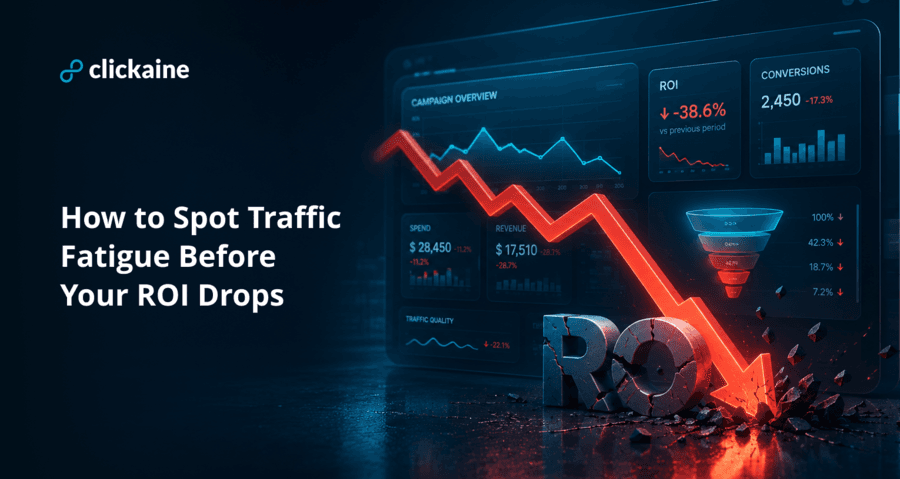
The best media buyers don’t wait for campaigns to fail—they recognize the early signs of traffic fatigue and make adjustments before performance starts slipping.
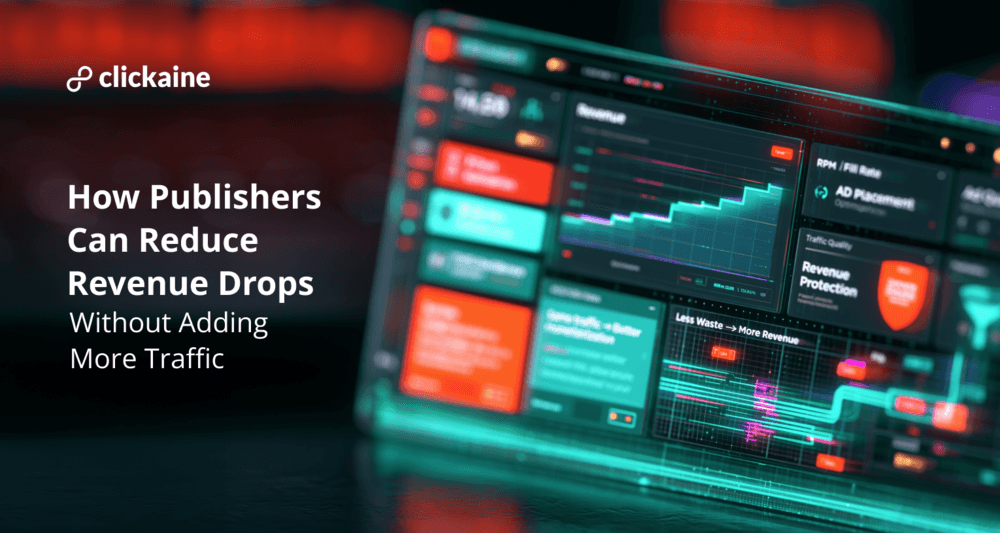
While increasing traffic can certainly help, it’s not always the fastest—or the smartest—solution. In many cases, revenue drops are caused by issues that already exist on the website: poor ad placement, declining user engagement, low-quality inventory, or changing advertiser demand.
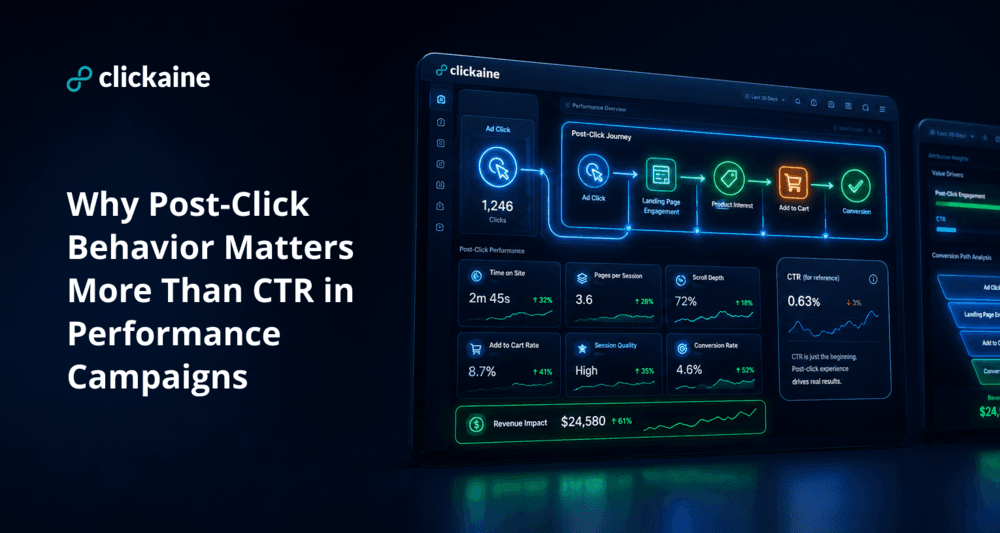
CTR has always been one of the first metrics advertisers look at. A high click-through rate often feels like proof that a campaign is working. After all, if people are clicking, the ad must be doing something right.

Attracting advertisers is not only about having traffic. For many publishers, the bigger opportunity is attracting higher-value advertisers — the ones who look for quality placements, stable audiences, clear traffic data, and a safe environment for their campaigns.

Increasing the budget is one of the most exciting parts of campaign management. The campaign is converting, the numbers look promising, and the next logical step seems obvious: spend more.

Scaling is not just about spending more. A campaign that works at $100 per day may not behave the same way at $1,000 per day. Traffic quality can change, competition can increase, conversion rates can drop, and the funnel may stop performing at the same level.
International traffic can be a strong revenue opportunity for publishers. But when all traffic is treated as one global audience, monetization often becomes less efficient. Different GEOs have different advertiser demand, payout levels, user behavior, device habits, and conversion potential. That is why publishers who understand their GEO mix usually monetize better than those who […]
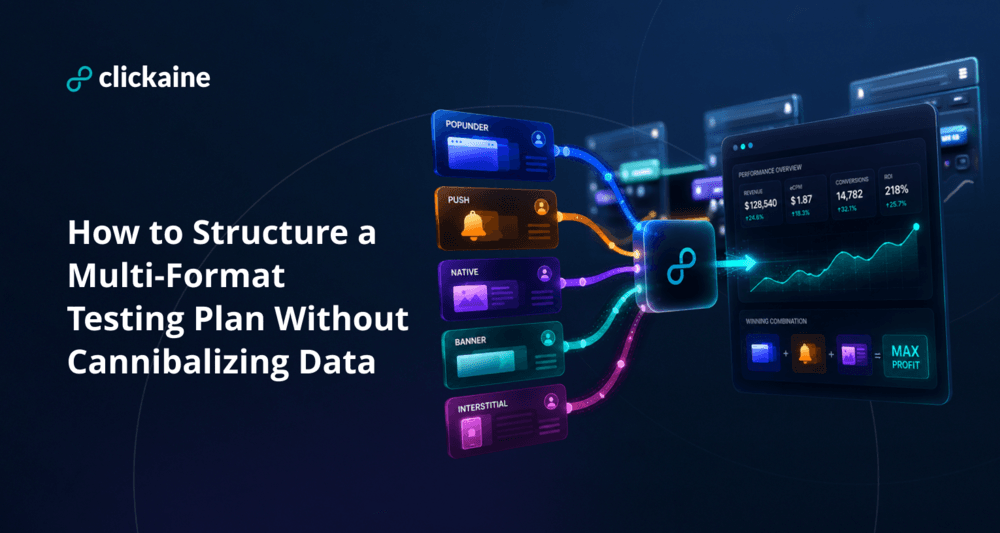
Testing multiple ad formats can help advertisers find new growth opportunities faster. But there is one common problem: when campaigns are not structured properly, formats start competing with each other, data becomes mixed, and optimization decisions become unclear.

Two publishers can send the same number of impressions or clicks — but earn completely different revenue.
Why? Because traffic volume is only one part of monetization. The real difference often comes from traffic quality, setup, formats, user experience, and optimization habits.
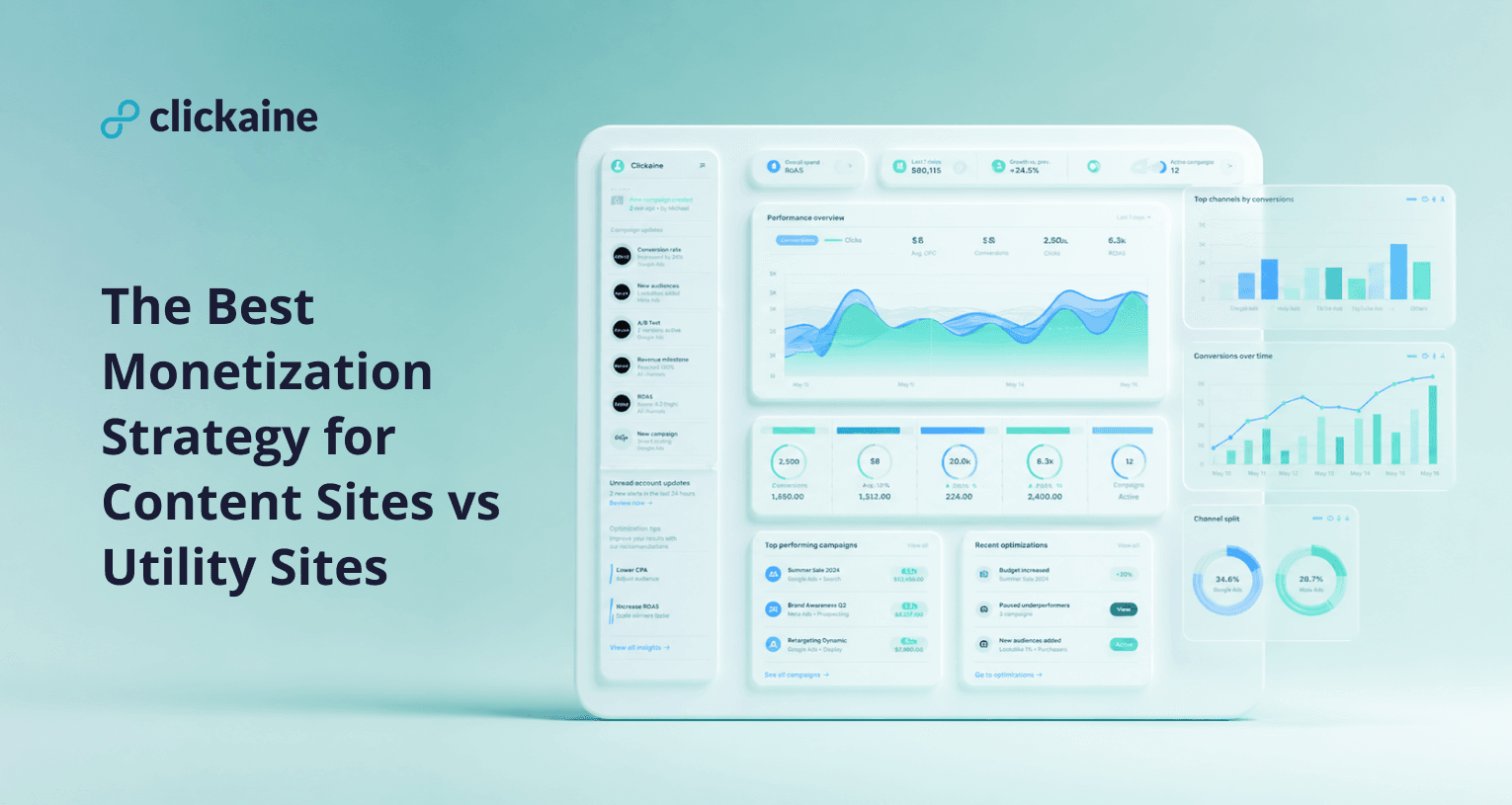
Not all websites should be monetized the same way. A content site and a utility site may both generate traffic, impressions, clicks, and revenue — but users visit them with completely different intentions.

Direct Click ads are one of the most powerful monetization formats for publishers. They are simple, high-impact, and capable of generating strong revenue even when traditional banner placements are limited or underperforming.

Many advertisers think that once a campaign starts showing results, the next step is simple: raise bids, add more traffic, and let the volume grow. Sometimes that works. But often, scaling too fast without traffic control leads to wasted budget, unstable performance, and weaker ROI.
That is where whitelist and blacklist strategies come in.

For many publishers, traffic is still measured in simple terms: more users means more revenue. But in practice, not all visitors are equal. Two users can land on the same page, see the same ads — and generate completely different results.

With proper tracking, every click becomes a data point. You start seeing patterns: which placements convert, which GEOs bring ROI, which devices waste your budget. Instead of looking at “campaign performance,” you begin to understand traffic behavior.

For many publishers, revenue growth still follows a simple formula: more traffic → more impressions → more revenue. But this approach has limits.
At some point, increasing ad density starts to hurt user experience, engagement drops, and long-term revenue suffers.
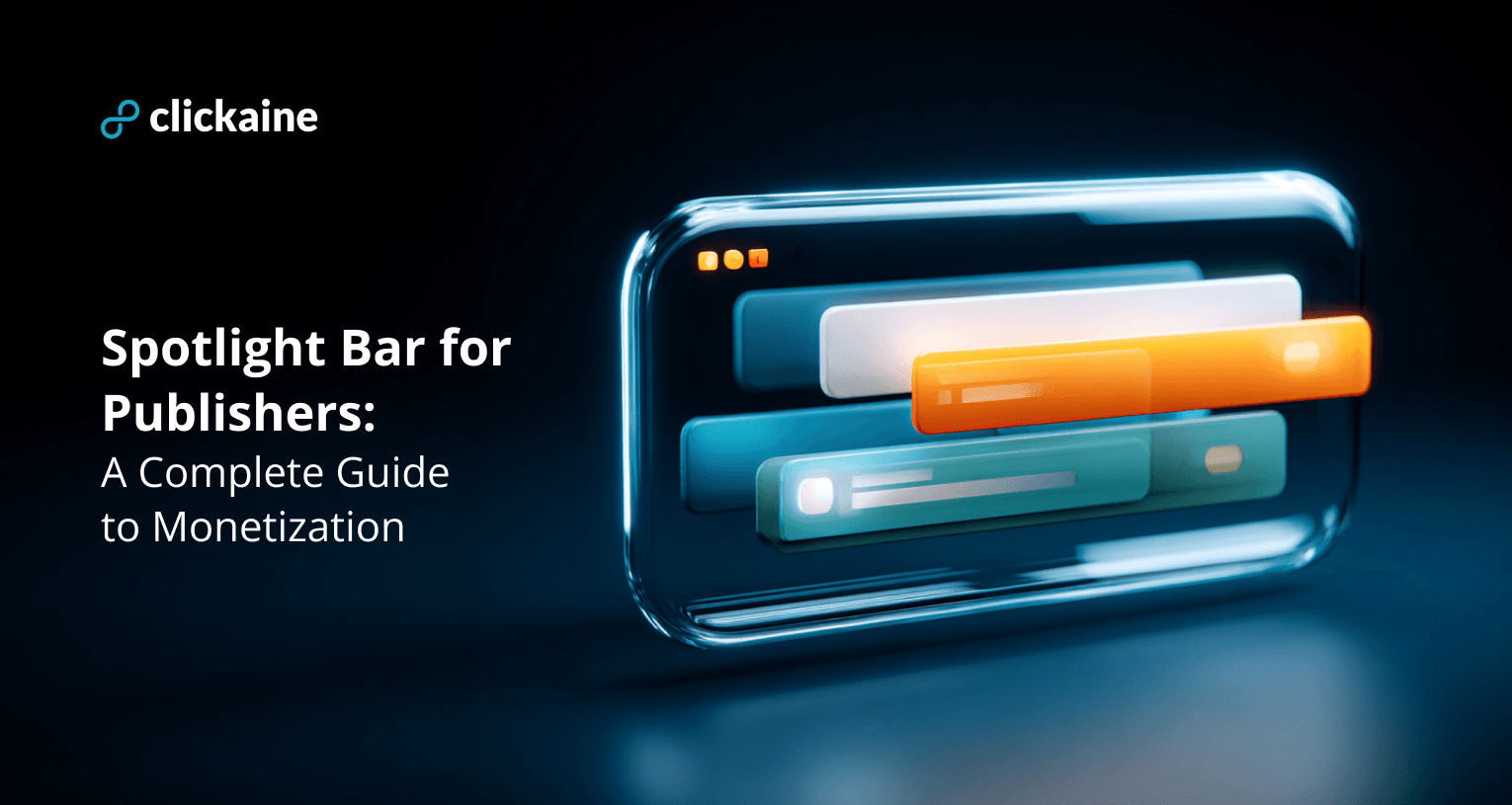
Monetization today is no longer about adding more ads — it’s about choosing formats that actually work without hurting user experience.
That’s exactly where Spotlight Bar comes in.
Most publishers approach monetization in a very straightforward way:
increase traffic, improve fill rate, and push CPM higher.
On paper, it makes sense. More impressions should mean more revenue. But in reality, two publishers with the same traffic volume can earn drastically different amounts.
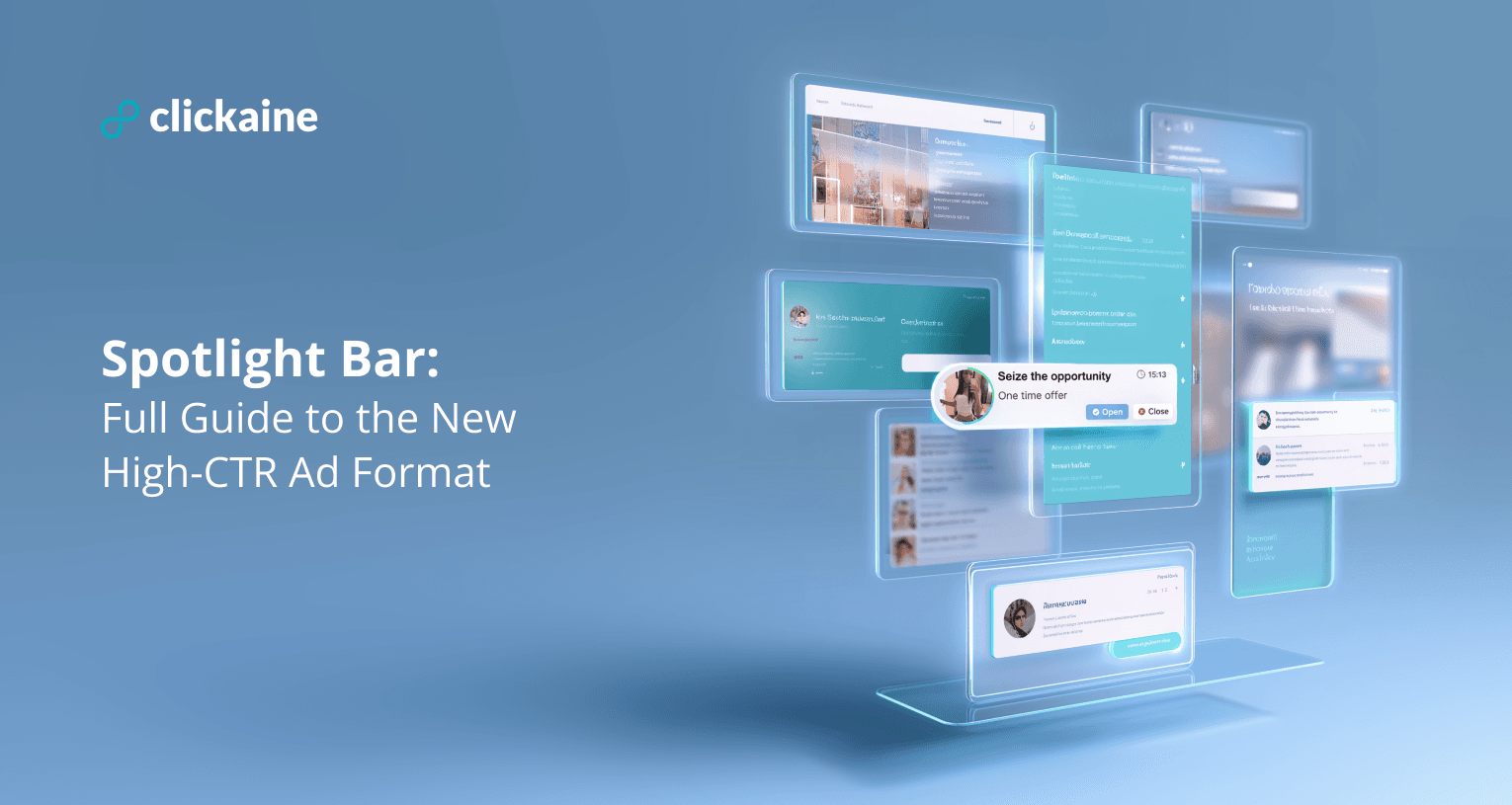
Clickaine has introduced a new advertising format — Spotlight Bar, designed to deliver maximum visibility while maintaining a clean and non-intrusive user experience.

As an advertiser who runs campaigns and focuses only on bids, creatives, or GEOs — you’re missing one of the most powerful levers in performance marketing:
Audience segmentation.
Not all traffic converts the same way — even within the same campaign.
As a publisher if you’ve ever noticed your revenue going up and down while your traffic stays relatively stable — you’re not imagining things.
What’s changing is advertiser demand.
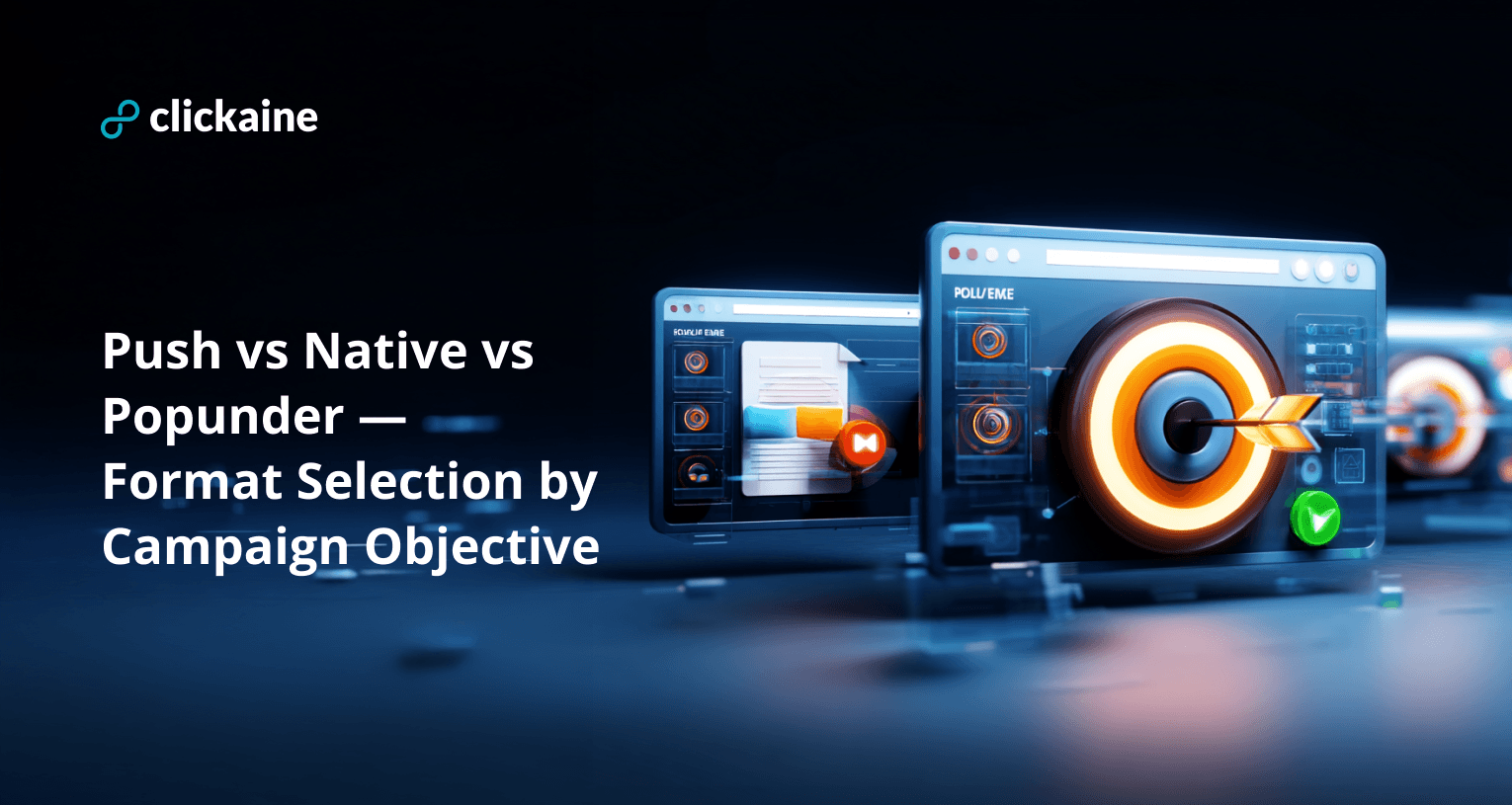
In performance marketing, choosing the wrong ad format can quietly destroy your results.
Many advertisers focus heavily on bids, creatives, and targeting — but overlook something fundamental:
The format itself determines how users experience your message.
Push, Native, and Popunder traffic behave differently.
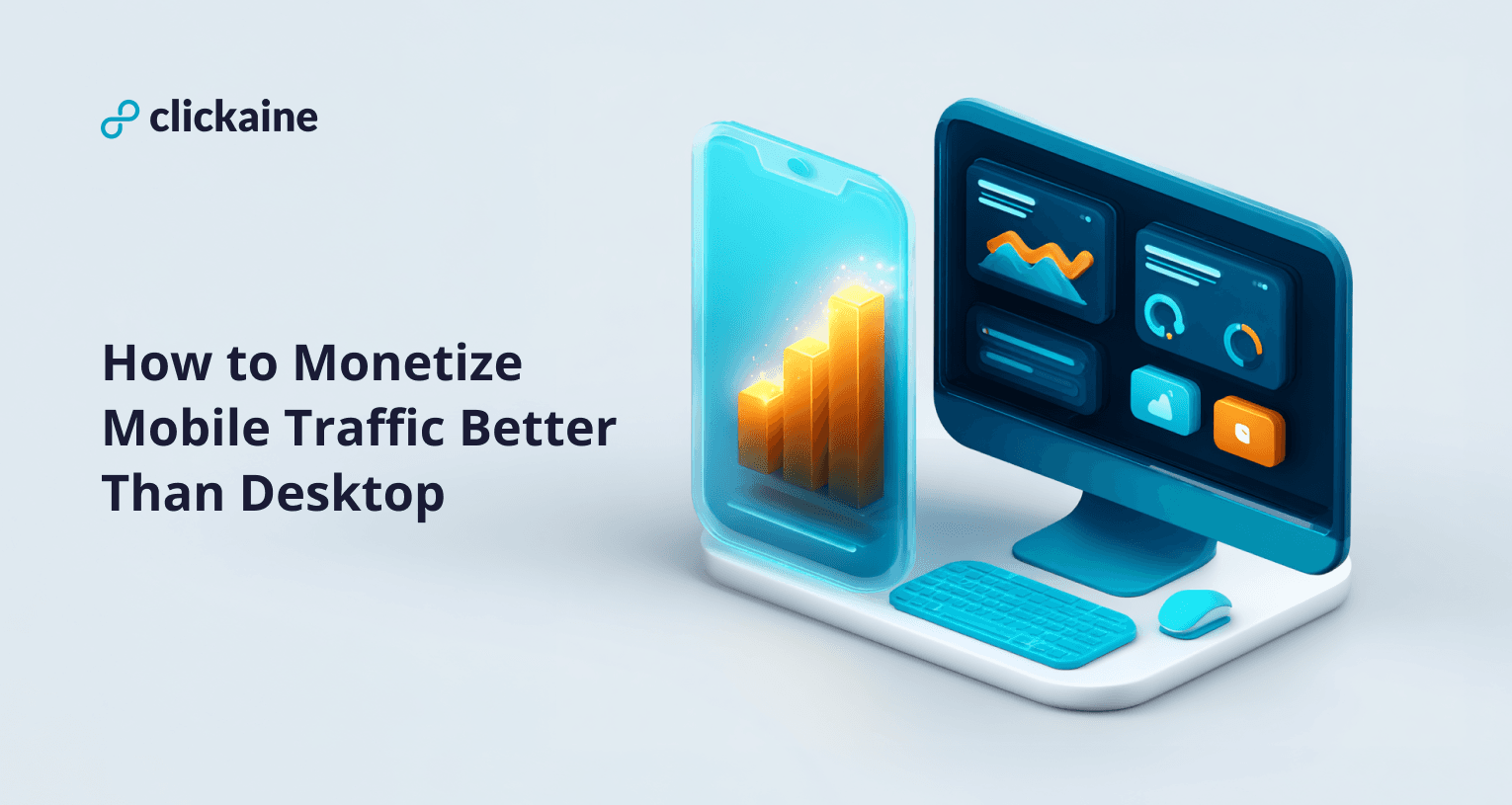
Mobile traffic now dominates global internet usage — and in many verticals, it outperforms desktop in both volume and profitability.
The problem isn’t mobile traffic.
The problem is how most advertisers try to monetize it.
CPM is easy to compare. It’s a simple number. Lower looks better. More impressions per dollar seems like a win.
When budgets are limited, especially during testing phases, cheap traffic appears to reduce risk.

Should you start with a landing page or a direct link?
The choice affects not only conversion rate, but also traffic learning, testing speed, scalability, and long-term profitability. Many advertisers pick one based on habit — not strategy — and end up misreading traffic quality or killing campaigns too early.

For publishers, revenue is not only about traffic volume.
Two websites with the same number of users can generate very different income depending on GEO, traffic type, and vertical demand.

Traffic testing is one of the most misunderstood stages in performance marketing. Many advertisers launch campaigns, collect scattered data, and make decisions too early — often killing potentially profitable sources or scaling traffic that was never truly validated.

Many website owners believe that monetization only makes sense once a site reaches hundreds of thousands or millions of users. As a result, publishers with 10,000–50,000 monthly users often delay monetization or rely on low-yield solutions that barely cover hosting costs.
In performance marketing, traffic quality is not only determined by source, GEO, or format — it is also heavily influenced by time. User intent, attention span, and conversion probability fluctuate throughout the day and across the week.

In performance marketing, traffic quality is the foundation of profitability. Even experienced advertisers can lose significant budgets to fake, manipulated, or structurally low-quality traffic if early warning signals are missed.
Many websites start as passion projects — blogs, niche content sites, tools, or communities built around a personal interest. Turning such a hobby site into a stable, full-time revenue stream is possible, but it requires a structured monetization strategy, disciplined testing, and risk management.
As affiliate marketing matures into a data-intensive and regulation-aware industry, media buying in 2026 will be defined by structural shifts rather than short-term tactics. Rising acquisition costs, stricter compliance, and algorithmic dominance are forcing advertisers and affiliates to rethink how traffic is sourced, optimized, and scaled.

Popunder advertising remains one of the most scalable, stable, and cost-efficient traffic sources in performance marketing. It delivers massive volumes, low CPMs, and uncrowded user attention — but the real power of Popunder comes only when you build a strategically engineered funnel.
Running advertising campaigns in restricted or regulated verticals is both a challenge and an opportunity. These verticals often deliver higher ROI, more engaged audiences, and premium payouts. But they also come with stricter rules, more complex compliance requirements, and a much narrower margin for error.

Monetizing a website requires more than adding an ad tag. As advertising policies, privacy laws, and browser standards evolve, compliance has become a critical factor in whether your site will be approved — or rejected — by an ad network.
Launching a new advertising campaign is not just about uploading creatives and turning on the budget. Now ad networks and traffic platforms rely heavily on learning algorithms, bid-stabilization systems, and traffic-quality optimization filters. Because of this, “cold launches” — campaigns started aggressively — often collapse before they even get a chance to optimize.
Phishing Warning: Please ensure you are visiting the correct website: https://clickaine.com, and double-check its accuracy. Read our fraud warning