
How Much Data Is Enough? Avoiding False Winners in Ad Campaign Testing
How much data do you need before optimizing an ad campaign? Learn how sample size, conversion variance, and statistical significance affect paid traffic decisions.

Managing your monetization should be easy — and with Clickaine's self-serve publisher platform, it truly is.
How much data do you need before optimizing an ad campaign? Learn how sample size, conversion variance, and statistical significance affect paid traffic decisions.

Before blaming your tracker, affiliate network, or traffic quality, there’s something worth understanding: conversion discrepancies don’t always mean something is broken. Different platforms may record different events, apply different attribution rules, or update their reports at different times.

If your creative promises one thing and the landing page delivers something different, users notice the disconnect instantly. That small gap between expectation and experience can increase bounce rate, reduce trust, lower conversion rate, and push CPA higher.

Targeting is supposed to make campaigns more efficient.
You narrow the GEO. Then the device. Then the OS. Then the browser. Then the carrier. Then the time of day. Then specific placements.
At first, it feels like optimization.
But there is a point where targeting stops improving performance and starts destroying the campaign’s ability to learn.
This is where over-segmentation becomes a problem.

Before buying traffic, affiliates should know how much they can actually afford to pay for an acquisition while still making the margin they want. And that number depends on more than the offer payout.
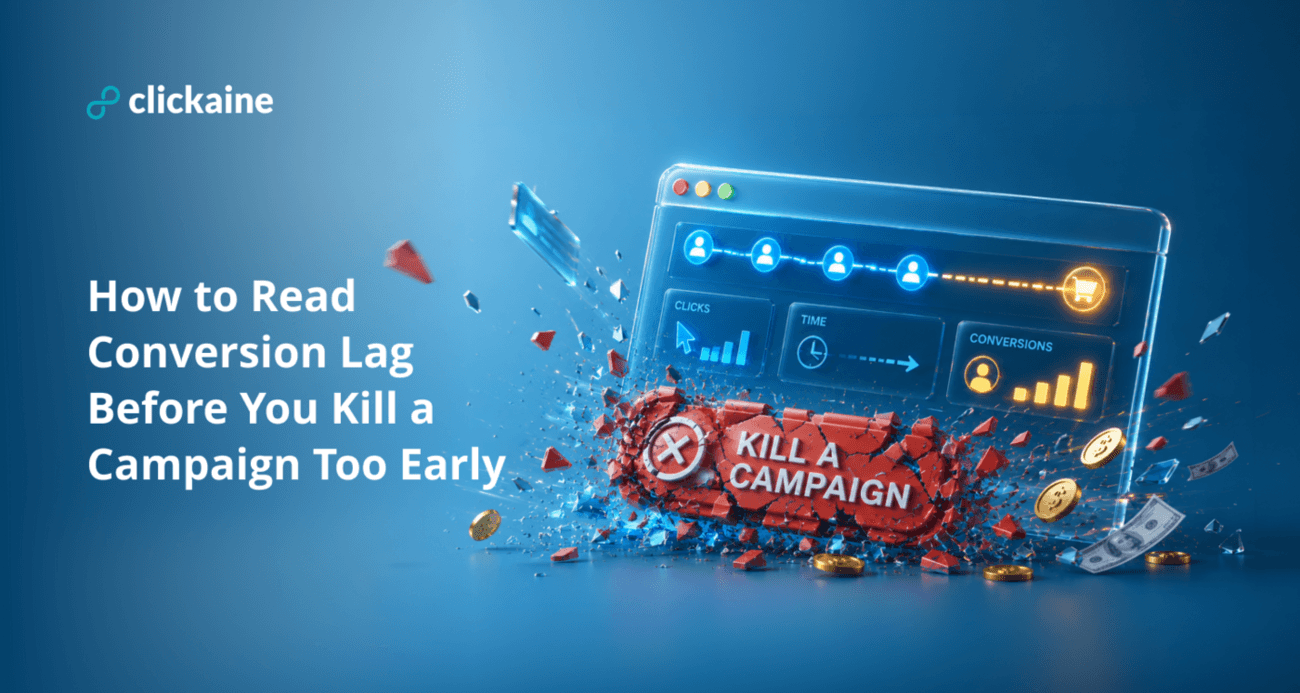
A campaign launches, traffic starts coming in, clicks look fine… but conversions are slow. A few hours pass, ROI looks weak, and the instinct is simple: pause the source, cut the placement, change the bid.
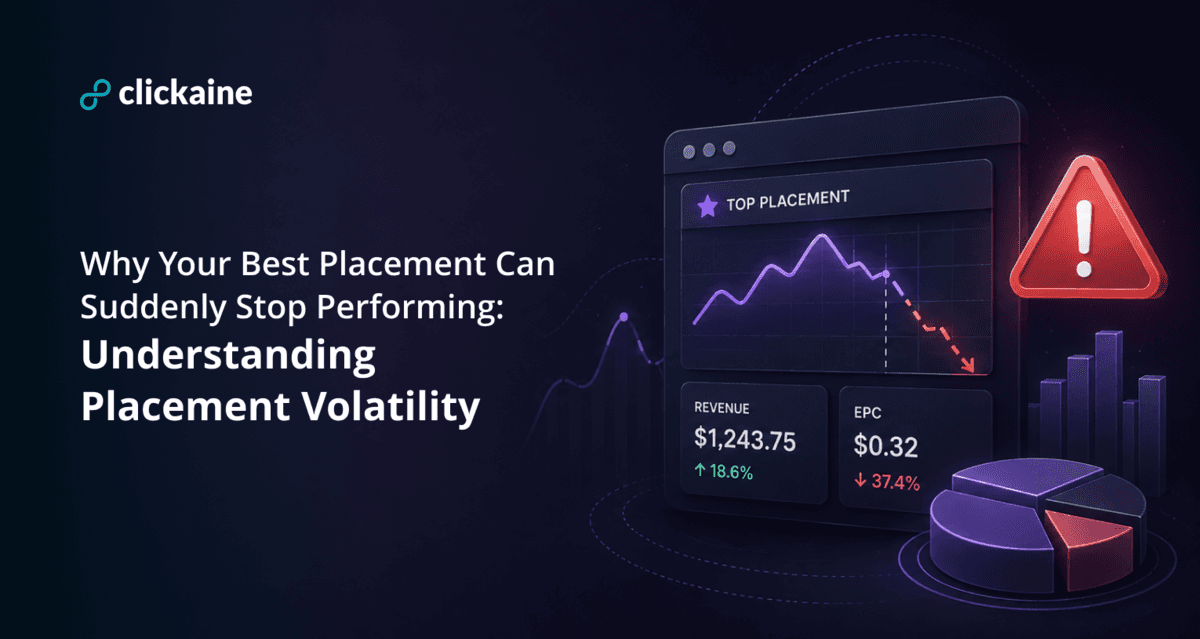
In performance advertising, a placement is not a fixed source with identical users, traffic quality, and competition every day. It is a dynamic environment. The same placement that delivered strong results last week can behave very differently today.
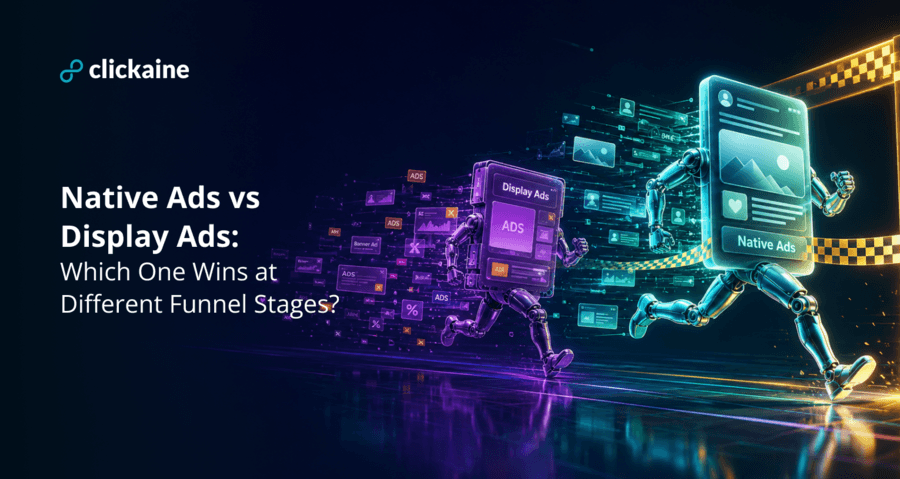
“Should I invest in native ads or display ads?”
The honest answer is both—but not at the same stage of the customer journey.
Each format has its strengths, and understanding where they perform best can significantly improve campaign performance and ROI.
Instead of choosing one over the other, let’s look at how each fits into the marketing funnel.
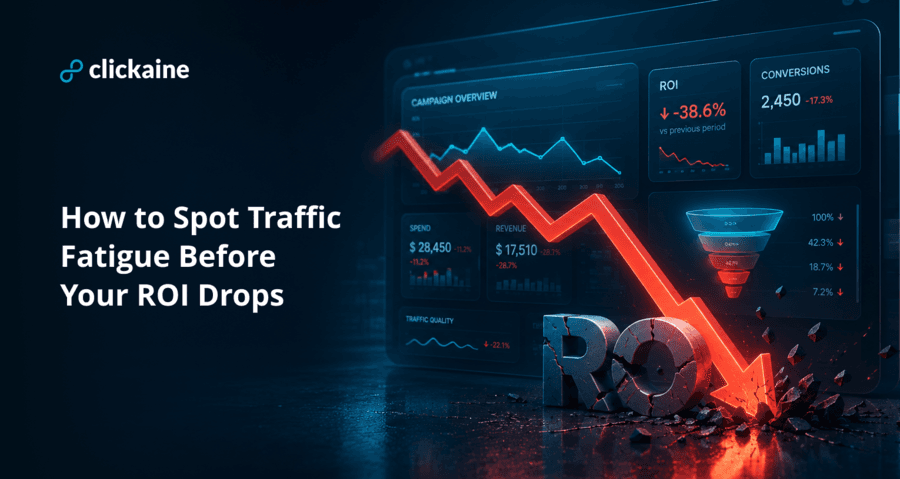
The best media buyers don’t wait for campaigns to fail—they recognize the early signs of traffic fatigue and make adjustments before performance starts slipping.
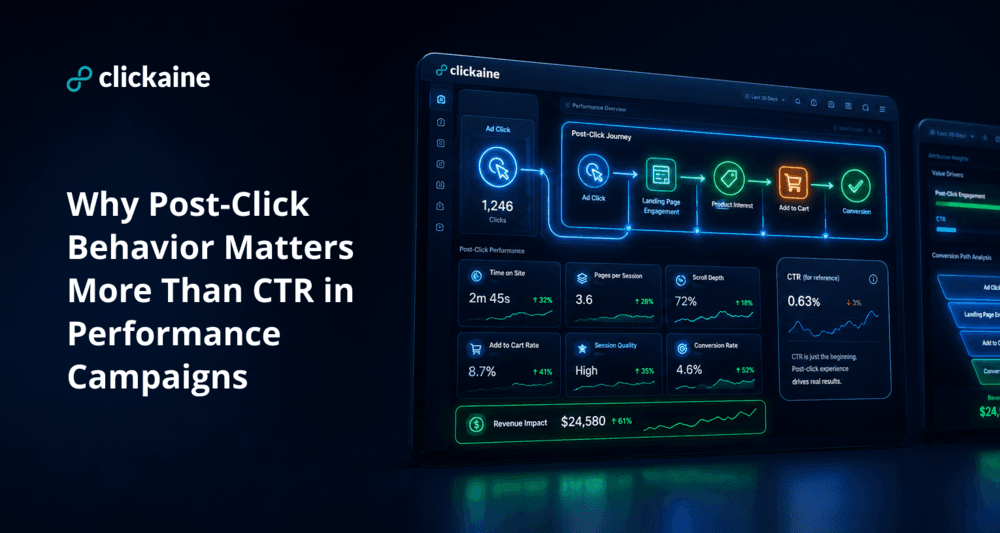
CTR has always been one of the first metrics advertisers look at. A high click-through rate often feels like proof that a campaign is working. After all, if people are clicking, the ad must be doing something right.
Increasing the budget is one of the most exciting parts of campaign management. The campaign is converting, the numbers look promising, and the next logical step seems obvious: spend more.
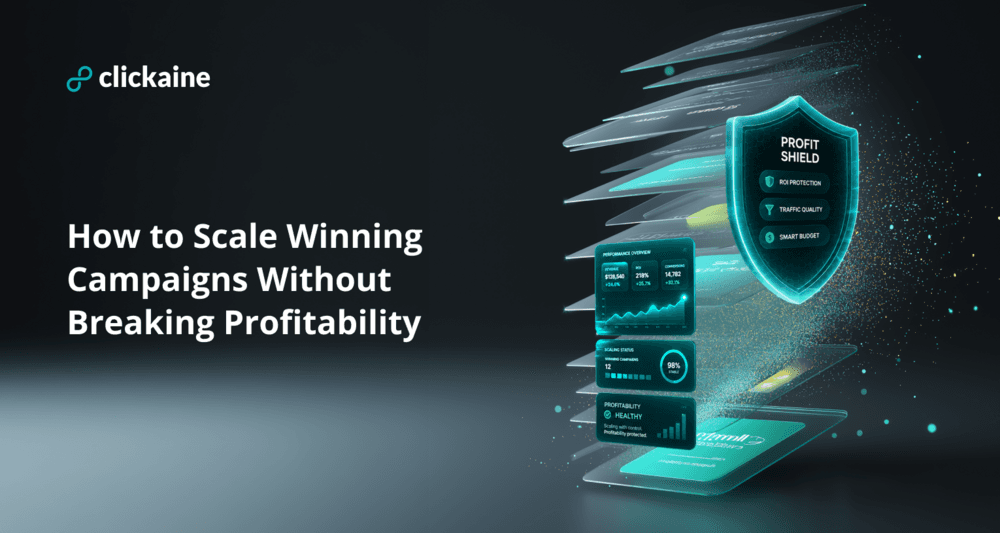
Scaling is not just about spending more. A campaign that works at $100 per day may not behave the same way at $1,000 per day. Traffic quality can change, competition can increase, conversion rates can drop, and the funnel may stop performing at the same level.
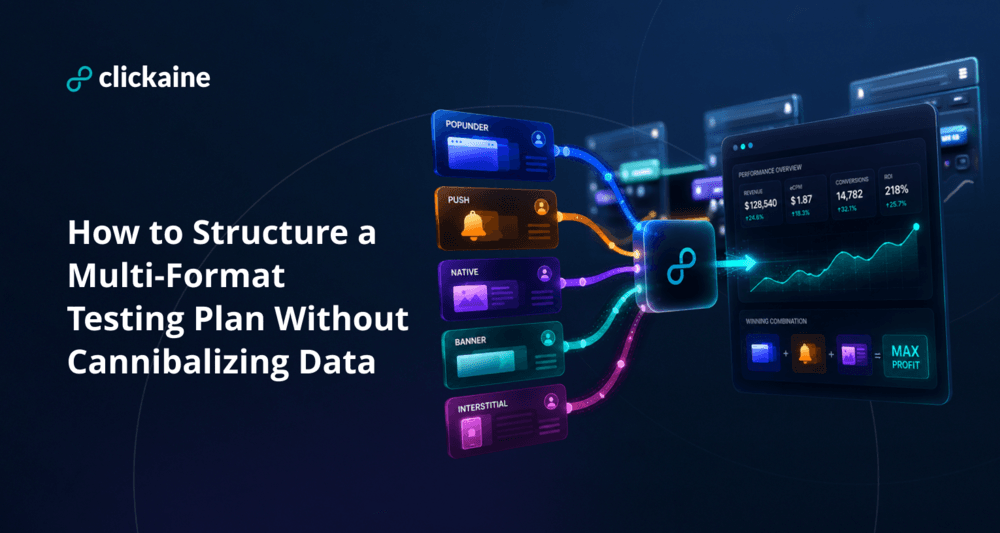
Testing multiple ad formats can help advertisers find new growth opportunities faster. But there is one common problem: when campaigns are not structured properly, formats start competing with each other, data becomes mixed, and optimization decisions become unclear.
Many advertisers think that once a campaign starts showing results, the next step is simple: raise bids, add more traffic, and let the volume grow. Sometimes that works. But often, scaling too fast without traffic control leads to wasted budget, unstable performance, and weaker ROI.
That is where whitelist and blacklist strategies come in.
With proper tracking, every click becomes a data point. You start seeing patterns: which placements convert, which GEOs bring ROI, which devices waste your budget. Instead of looking at “campaign performance,” you begin to understand traffic behavior.
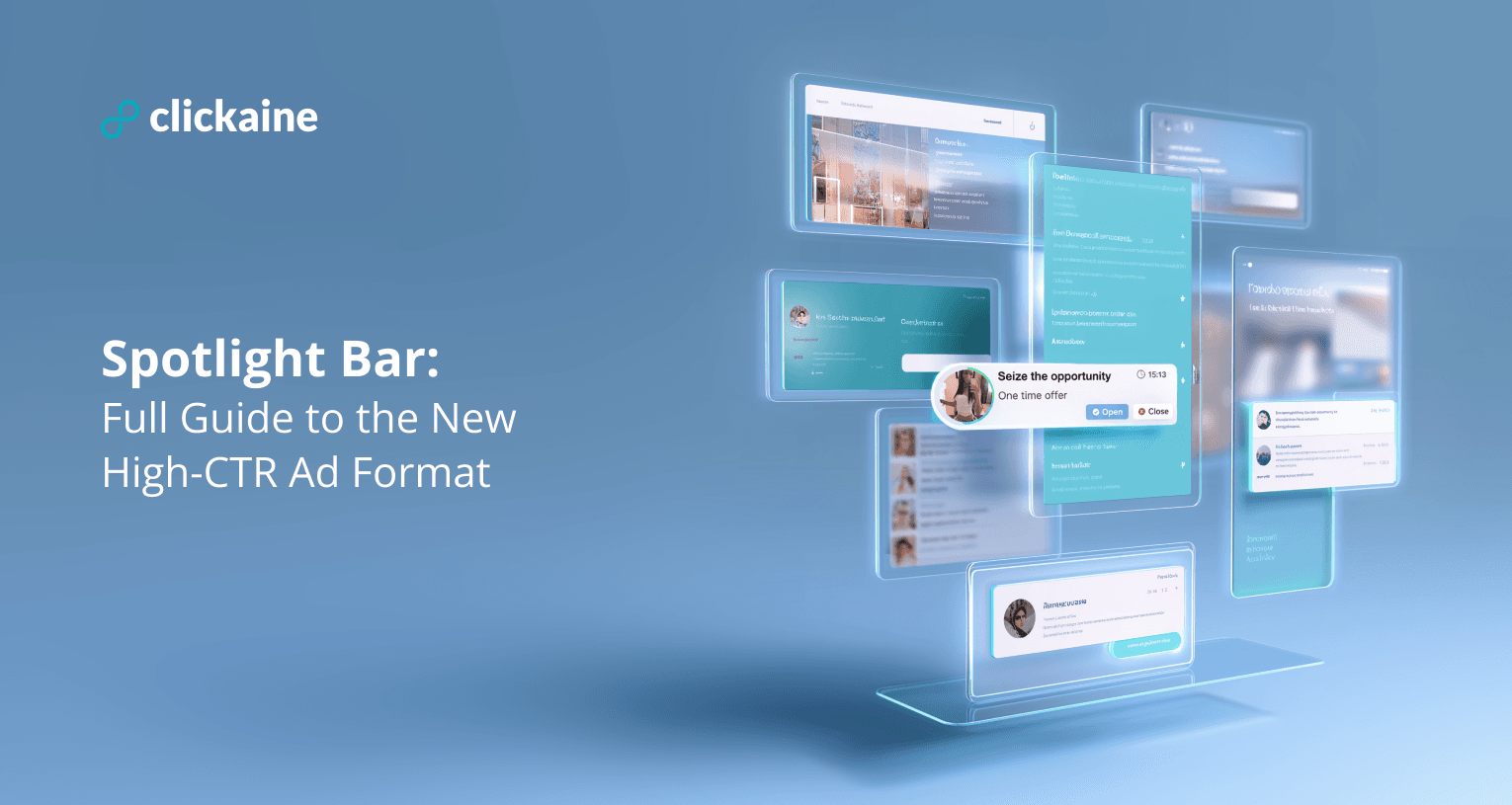
Clickaine has introduced a new advertising format — Spotlight Bar, designed to deliver maximum visibility while maintaining a clean and non-intrusive user experience.
As an advertiser who runs campaigns and focuses only on bids, creatives, or GEOs — you’re missing one of the most powerful levers in performance marketing:
Audience segmentation.
Not all traffic converts the same way — even within the same campaign.
In performance marketing, choosing the wrong ad format can quietly destroy your results.
Many advertisers focus heavily on bids, creatives, and targeting — but overlook something fundamental:
The format itself determines how users experience your message.
Push, Native, and Popunder traffic behave differently.

A spy service is a specialized program for searching and monitoring competitors’ advertising campaigns and creatives. It allows advertisers to identify the following elements of a campaign
CPM is easy to compare. It’s a simple number. Lower looks better. More impressions per dollar seems like a win.
When budgets are limited, especially during testing phases, cheap traffic appears to reduce risk.
Should you start with a landing page or a direct link?
The choice affects not only conversion rate, but also traffic learning, testing speed, scalability, and long-term profitability. Many advertisers pick one based on habit — not strategy — and end up misreading traffic quality or killing campaigns too early.

Traffic testing is one of the most misunderstood stages in performance marketing. Many advertisers launch campaigns, collect scattered data, and make decisions too early — often killing potentially profitable sources or scaling traffic that was never truly validated.
In performance marketing, traffic quality is not only determined by source, GEO, or format — it is also heavily influenced by time. User intent, attention span, and conversion probability fluctuate throughout the day and across the week.

In performance marketing, traffic quality is the foundation of profitability. Even experienced advertisers can lose significant budgets to fake, manipulated, or structurally low-quality traffic if early warning signals are missed.
As affiliate marketing matures into a data-intensive and regulation-aware industry, media buying in 2026 will be defined by structural shifts rather than short-term tactics. Rising acquisition costs, stricter compliance, and algorithmic dominance are forcing advertisers and affiliates to rethink how traffic is sourced, optimized, and scaled.
Popunder advertising remains one of the most scalable, stable, and cost-efficient traffic sources in performance marketing. It delivers massive volumes, low CPMs, and uncrowded user attention — but the real power of Popunder comes only when you build a strategically engineered funnel.
Running advertising campaigns in restricted or regulated verticals is both a challenge and an opportunity. These verticals often deliver higher ROI, more engaged audiences, and premium payouts. But they also come with stricter rules, more complex compliance requirements, and a much narrower margin for error.
The digital advertising landscape continues to evolve, and publishers today have more network options than ever. But more choice means more confusion — CPM models vary, formats behave differently, support quality is inconsistent, and not every ad network treats publishers fairly.
Launching a new advertising campaign is not just about uploading creatives and turning on the budget. Now ad networks and traffic platforms rely heavily on learning algorithms, bid-stabilization systems, and traffic-quality optimization filters. Because of this, “cold launches” — campaigns started aggressively — often collapse before they even get a chance to optimize.
Running profitable ad campaigns doesn’t always require big budgets.
In fact, many successful affiliates start small — testing smart, learning fast, and scaling only what works.
If you’ve got $50 or less to test, don’t worry — you can still collect valuable data, identify winning creatives, and set the foundation for long-term ROI.
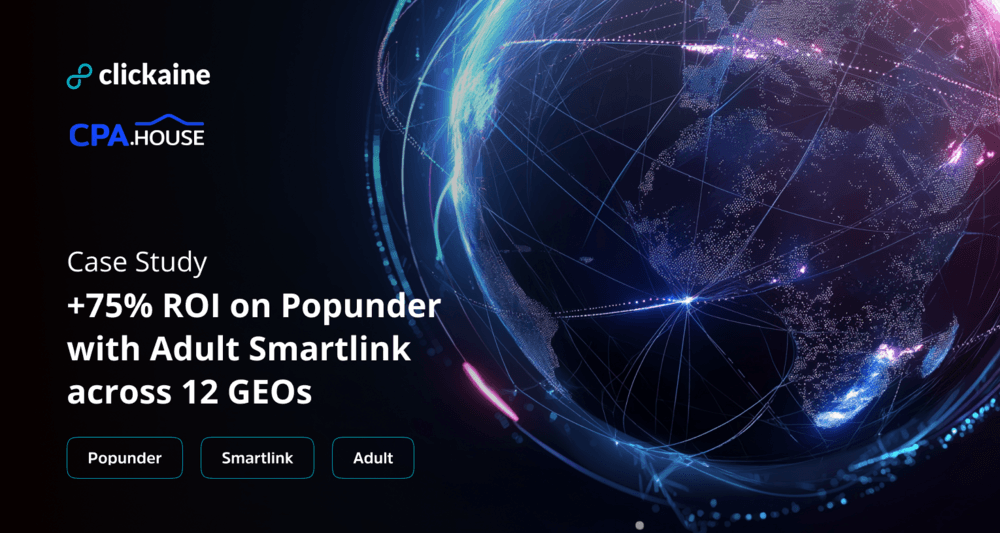
I joined the Clickaine advertising network to test popunder traffic with an adult smartlink from the CPA.house affiliate network. I had no prior experience in these GEOs — it was a pure experiment. After just 5 days of testing, ROI turned positive, and within 20 days of running the campaign, the profit nearly doubled the spend.
Popunder advertising remains one of the most powerful tools for performance marketers and direct response campaigns.
But running a successful pop campaign isn’t just about buying large volumes of traffic — it’s about understanding how often users see your ads and where they are in their journey when they do.
In this article, we’ve teamed up with PeerClick (one of the most advanced performance tracking platforms) to highlight the most common tracking mistakes affiliates make — and how Clickaine + PeerClick together can fix them.
The iGaming vertical (sports betting, casinos, lotteries, poker, esports) is one of the most competitive — and profitable — in performance marketing. While Tier-1 GEOs bring high-value players, they’re also saturated with competition, strict regulations, and high CPMs.
CPM (Cost per Mille) is one of the most important metrics in digital advertising. It directly impacts how much traffic you buy, how your ads are prioritized in auctions, and ultimately how profitable your campaigns are.

In this article, we’ll break down the differences between Tier 1, Tier 2, and Tier 3 GEOs and help you align them with your budget, vertical, and format strategy.
In this article, we’ll break down how to fight ad fatigue and keep your campaigns converting using smart tactics like frequency capping, creative rotation, ad refresh logic, and visual variety.

This glossary is your go-to cheat sheet for the 30 most common (and important) affiliate marketing terms — written in simple language and perfect for beginners.
Looking for a powerful yet non-disruptive way to get your offer in front of engaged users? Skim Ads are one of the most effective traffic formats for advertisers who value quality over volume — delivering intent-driven clicks from real users already interacting with content.
In the fast-paced world of performance marketing, every impression, click, and conversion matters. That’s why Clickaine offers an Automatic Optimization feature—a powerful tool that helps advertisers boost efficiency, reduce waste, and maximize ROI with less manual effort.
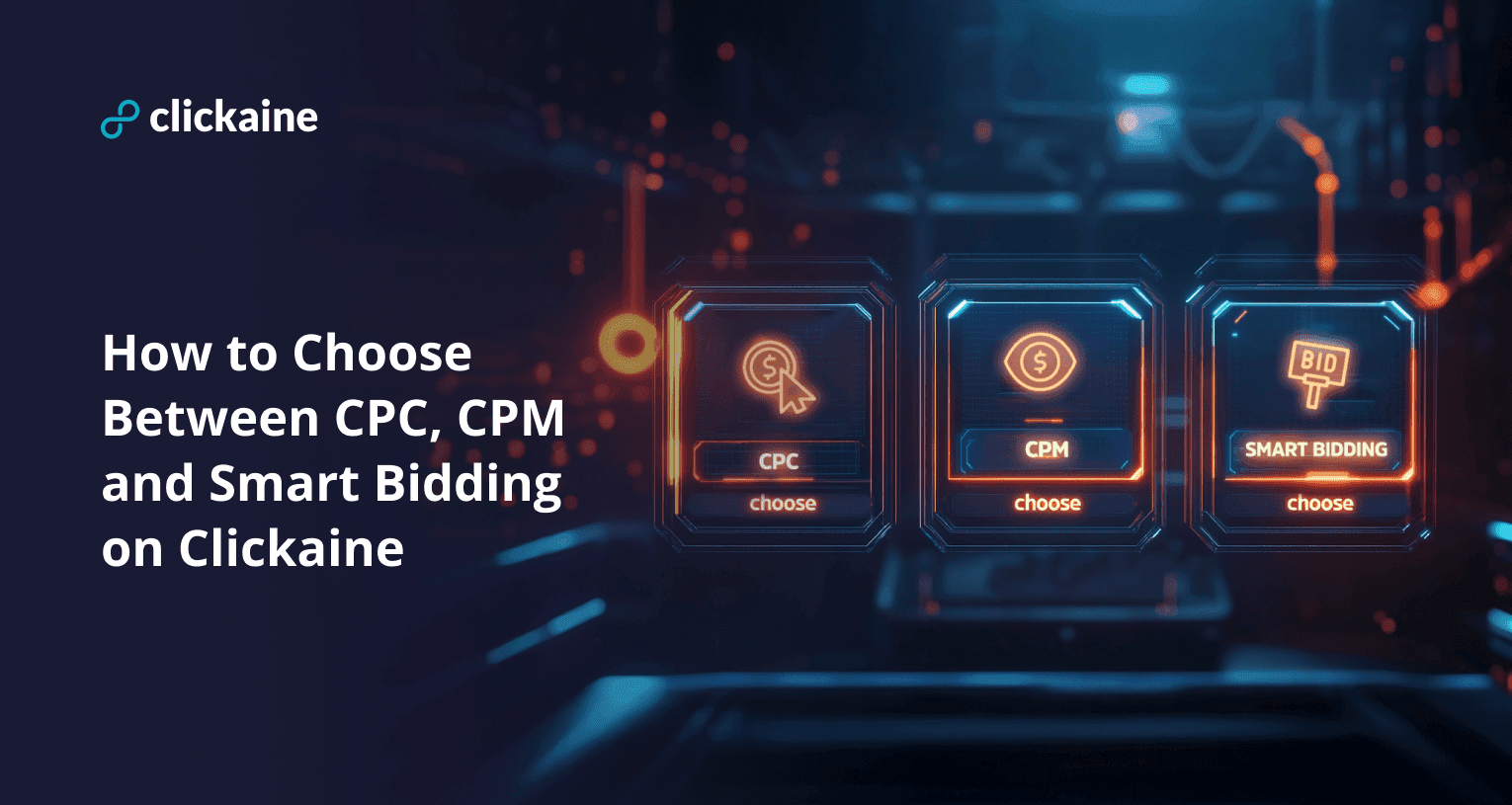
At Clickaine, we give advertisers the flexibility to choose from a variety of transparent, performance-oriented pricing models, so you can launch smarter campaigns based on your goals: reach, clicks, or conversions.
In the fast-moving world of digital advertising, Clickaine gives advertisers the tools they need to succeed: access to premium global traffic, full campaign control, performance-driven optimizations, and automation that saves both time and budget.
At Clickaine, we believe in growing together. That’s why we’ve launched a simple, rewarding referral program that lets you monetize your network — whether you’re an advertiser, a publisher, or both.

As an advertiser, choosing the right vertical is just as important as selecting the right traffic. At Clickaine, we’ve identified the top-performing verticals that consistently drive results across native, popunder, video, and banner formats.
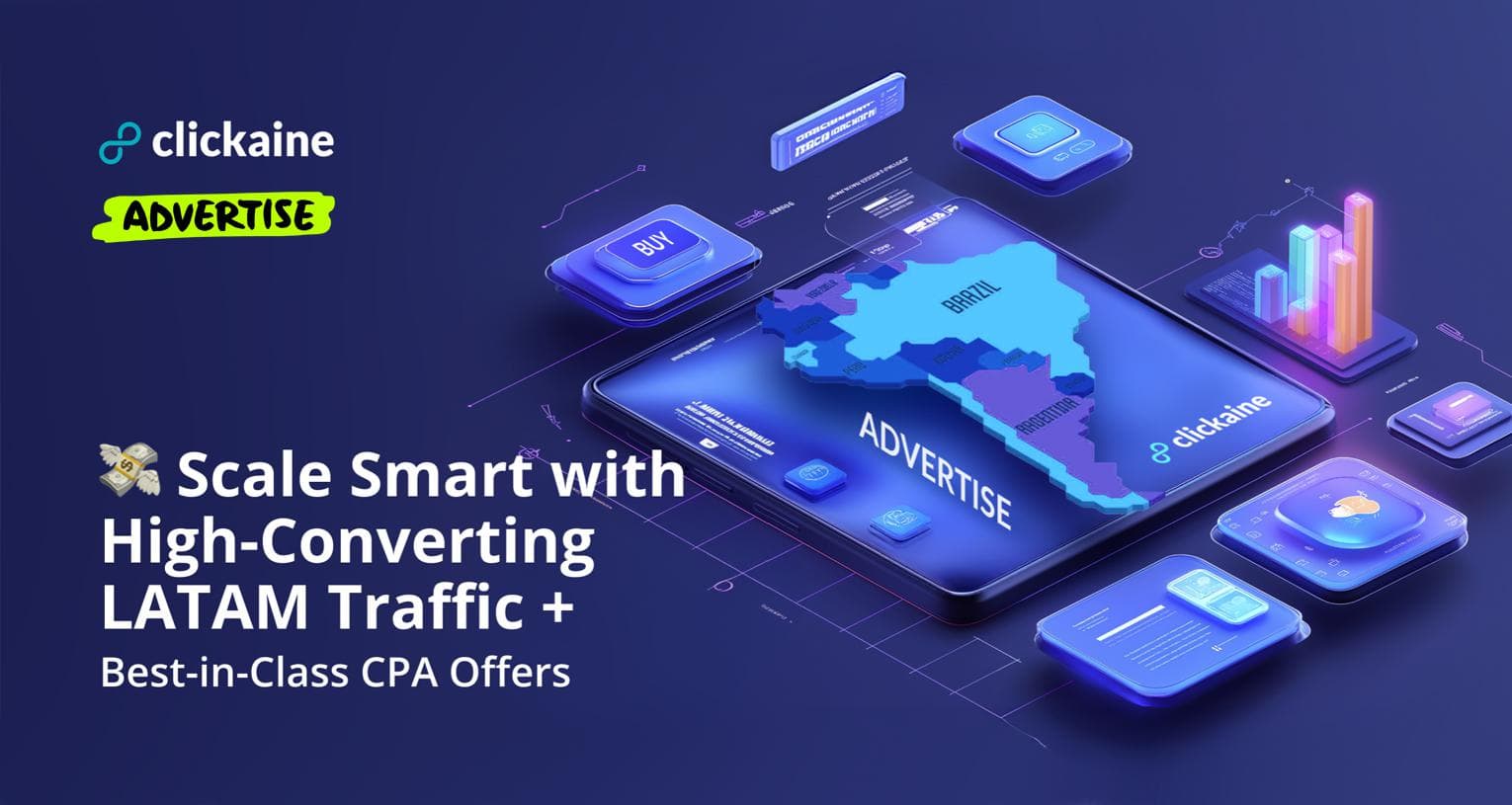
The Latin American digital advertising scene is on fire — and if you’re a media buyer looking for high-converting, cost-effective opportunities, it’s time to turn your focus south.
At Clickaine, we’ve optimized popunder traffic to deliver massive exposure with real user engagement, making it one of the best-performing formats for advertisers across verticals like iGaming, Utilities, Finance, Dating, and Lead Gen.
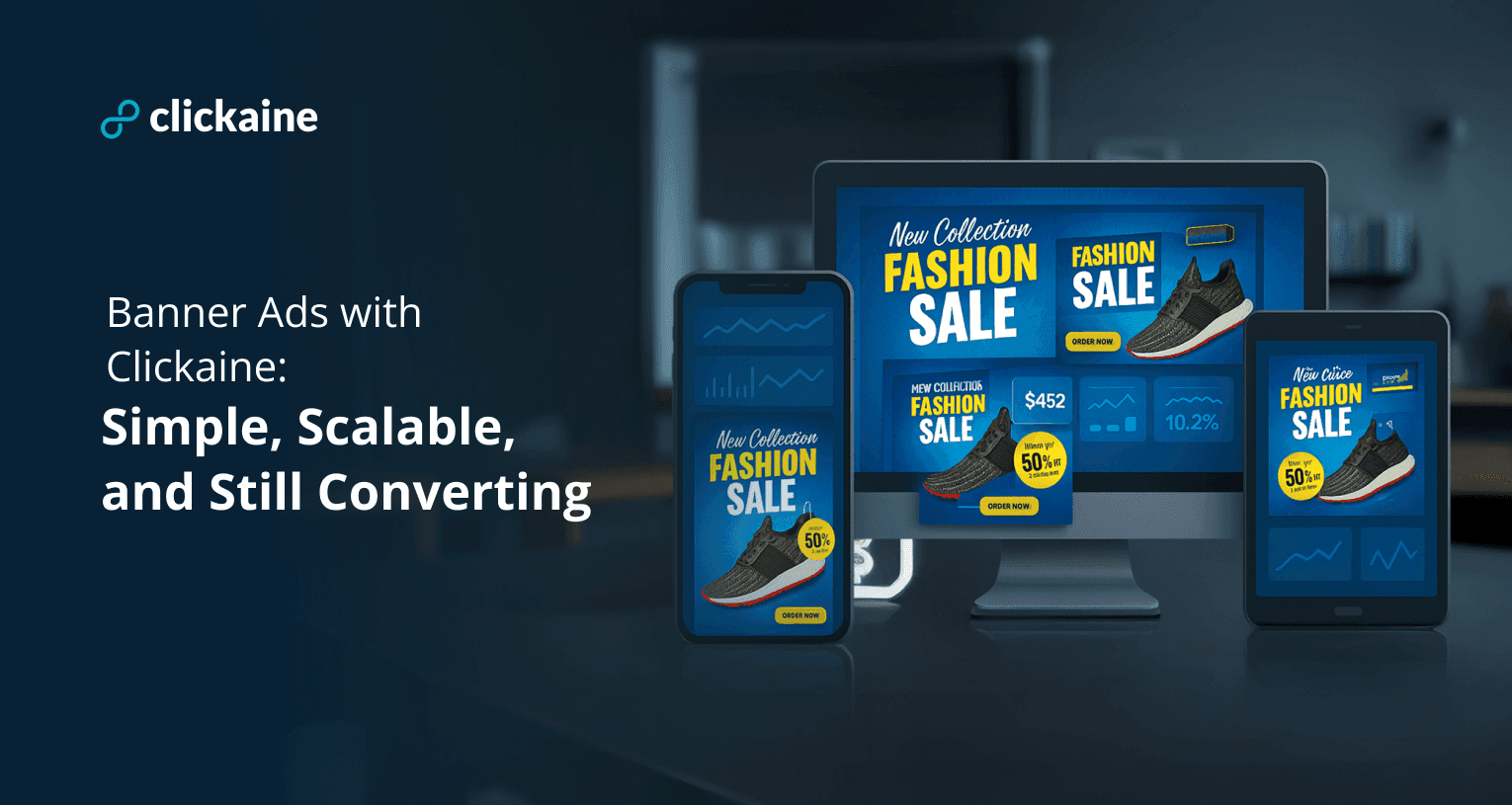
In a world of flashy formats and aggressive popups, banner ads remain one of the most trusted and effective tools in a performance marketer’s arsenal. And when executed right — with smart placement, clear targeting, and high-quality traffic — they still convert at scale.
When launching performance campaigns with Clickaine, choosing the right ad format is key to hitting your KPIs. Each format serves a specific purpose and behaves differently based on user interaction, timing, and intent.
The sports calendar for 2025 is packed with thrilling events that offer unparalleled opportunities for betting campaigns. With Clickaine’s advanced targeting options and premium traffic solutions, you can connect with the most engaged audience across the globe.
In the ever-evolving digital advertising landscape, reaching the right audience at the right time is key to running a successful campaign. With Clickaine’s robust tools and advanced targeting options, advertisers can connect with their ideal audience more effectively than ever. This article will walk you through the top strategies to maximize ad performance by targeting your audience based on GEOs, niches, and devices.
Phishing Warning: Please ensure you are visiting the correct website: https://clickaine.com, and double-check its accuracy. Read our fraud warning